How to Track Lash Client History So You Never Ask ‘What Did We Do Last Time?’ Again
Written by SuiteCal Team
She walks in for a 2-week fill. You glance at the name in your calendar. And then you ask the question every solo pro dreads: “So, remind me what we did last time?”
It is not a great look. She came back because she loved her lashes. Now she is wondering if you even remember her. That little moment of doubt is the thing that makes a loyal client start browsing other people’s booking pages.
Tracking lash client history is not about being organized for the sake of it. It is about walking into every fill already knowing the curl, the length map, the retention issues, and the inspo photo she showed you three months ago. This is the system that gets you there.
The “what did we do last time?” problem
You are juggling 80 to 120 clients. Some come every two weeks, some disappear for three months and come back wanting the exact same set. Remembering what you did for each one is not a memory test you should be taking.
The real cost is not embarrassment. It is time. When you do not have records, the first 10 to 15 minutes of every fill turns into a consultation. You are asking about curl preferences again. Checking retention by feel. Guessing at lengths because the last set has grown out too much to read. That is billable time you are spending on detective work.
According to a Bureau of Labor Statistics profile on skincare specialists, the personal care and beauty industry continues to grow, with solo practitioners making up a significant share of the workforce. More clients, more fills, more details to track. The techs who keep good records are the ones whose retention rates stay high as their books fill up.
What client history actually needs to include
Most solo pros keep some kind of notes. A text file. A sticky note on the back of a consent form. Maybe a “Notes” field in their phone contacts. The problem is not that you have zero records. The problem is that the records you have are scattered, incomplete, and impossible to pull up in the 30 seconds before a client sits down.
A complete client record for lash work should cover:
- •Lash map and specifications: curl type, diameter, length map (inner to outer corner), volume fan count if applicable
- •Adhesive and products used: brand, dry time, any sensitivity reactions
- •Retention notes: how many lashes were left at her fill, any problem areas (outer corners dropping early, for example)
- •Client preferences: does she want dramatic or natural, does she sleep on one side, any lifestyle factors that affect wear
- •Photos from the last visit. This one is the most important and the most neglected.
If you cannot pull all of that up in under a minute, your system has gaps. Those gaps cost you time on every single appointment.
Why photos belong in your client record, not your camera roll
You probably already take photos. Most lash techs do. The issue is where those photos live. Right now they are mixed in with your grocery list screenshots, your kid’s birthday photos, and 47 selfies from last weekend. When Sarah walks in for a fill and you need to see what her last set looked like, you are scrolling through your camera roll trying to remember the date.
That photo is clinical data. It tells you more about the last appointment than any text note ever could. The curl direction, the density, how the lash map hit her eye shape. You can see retention at a glance. You can spot whether the outer corners held or not. All of that disappears the second you lose track of which photo belongs to which client.
The other problem with camera roll storage is privacy. Your client’s close-up photos are sitting on the same device you hand to friends, share screens from, and back up to a cloud service she never consented to. If you are serious about running a professional lash business, client photos need to be stored somewhere private, tagged to the right client, and accessible only to you. A growing number of state privacy laws, including California’s CCPA, give consumers rights over their personal data, including photos. Keeping client images in a dedicated, private system is not just smart. It is increasingly the legal expectation.
Before, After, and Inspo: the three photos that matter
Not every photo you take is worth keeping in a client record. You do not need 15 angles from every appointment. Three types of photos cover everything you need for consistent fills and happy returning clients.
Before: Snap this when she sits down, before you touch anything. This is your retention check. How many lashes survived since the last visit? Are there gaps in specific zones? Is one eye worse than the other? This photo answers all of those questions in two seconds flat.
After: Your finished set. This is the most valuable photo in the entire record because it becomes your reference for the next fill. When she comes back in two or three weeks, you open the After photo from last time and you know exactly what you are recreating. No guessing. No asking. Just working.
Inspo: The screenshot she sent you on Instagram. The Pinterest save she pulled up on her phone. Save it with her record so you can reference it on the next visit without asking her to dig through her saved posts again. Inspo photos are the bridge between what she wants and what you deliver, and they are worth keeping.
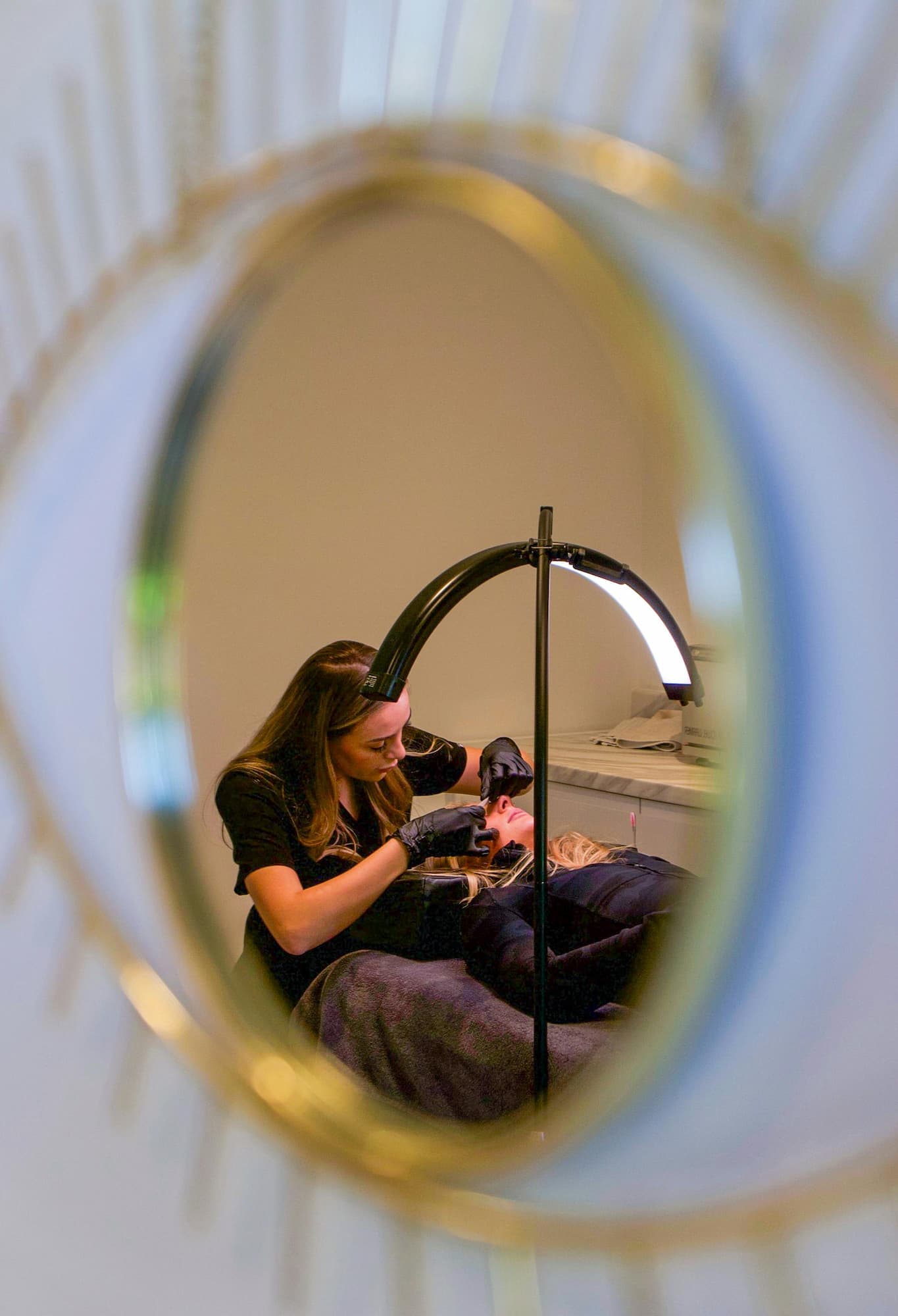
Building a fill prep routine that takes 30 seconds
Here is what great fill prep actually looks like. Your next client is arriving in five minutes. You open her profile, see the After photo from her last completed appointment right at the top, glance at your notes on curl and length, and you are ready. No scrolling. No guessing. No awkward “remind me what we did.”
That 30-second check changes the entire appointment. You start working sooner. You match the previous set more accurately. She notices, even if she does not say it out loud. Consistency is the thing that makes clients rebook without shopping around, and it starts before you pick up the tweezers.
This kind of prep only works if your photos and notes are attached to the client, not floating in a camera roll or a spreadsheet. SuiteCal’s client photo gallery was built for exactly this. Every client profile surfaces the most recent After photo the moment you open it, and each photo is tagged as Before, After, or Inspo so you can find what you need without sorting through everything. Capture is three taps from the appointment screen. Photos stay private, stored in a secure location only you can access.
Pair that with client notes in SuiteCal, and your fill prep becomes a 30-second habit instead of a 10-minute scramble.
What to do with clients who have no history yet
If you are reading this and thinking “I have 90 clients and zero records on most of them,” do not try to back-fill everything at once. That is overwhelming and you will quit by Thursday.
Start forward. The next client who sits down, take one Before photo and one After photo. Write down the curl, length map, and any notes about her preferences. That is it. You now have a record for that client. When she comes back in two weeks, you will already be ahead.
For the first visit with any new client, a slightly longer intake makes sense. Ask about allergies, sleep position (side sleeper = outer corner issues), lifestyle (gym, swimming, sauna use), and how she cares for her lashes at home. If you need a checklist for this, we wrote a full new client onboarding checklist that covers the whole flow.
For existing clients with no records, there is a simple trick. When she sits down for her fill, take a good look at the remaining lashes before you start. Snap a Before photo. That photo plus your trained eye gives you most of the data you need: what curl is growing out, how dense the remaining set is, which zones held and which didn’t. You are reverse-engineering the last appointment from the evidence in front of you. One fill cycle of that and you have a baseline.
The 60-second post-appointment habit that pays for itself
Right after she leaves. Before the next client sits down. Before you check your phone. Sixty seconds is all it takes.
- Tag and save your After photo to her client record.
- Note anything unusual: a curl change she requested, an outer corner that needed extra work, a product switch.
- Update her retention score in your head. If she was at 60% coverage when she walked in at two weeks, that is worth writing down.
This tiny habit compounds. After three or four visits, you have a timeline for every client. You can see whether her retention improved after you switched adhesives. You can tell whether the new length map worked better than the old one. You start making data-driven decisions about individual clients, and your work gets measurably better because of it.
If you manage different personality types, having a full visual history also helps you tailor the experience. The client who always wants something new gets shown her last three sets so you can suggest the next evolution. The client who panics at any change sees her After photo and relaxes because you are going to give her exactly what she had before.
The solo pros who build this habit early are the ones whose clients stay for years instead of months. Not because their lash work is dramatically better than everyone else’s. Because every visit feels like you remembered. And honestly, you did. You just had help.
Stop guessing what you did last time.
SuiteCal’s client photo gallery and client tracker keep every photo, note, and preference attached to the right client. Open her profile and your fill prep is done.
Try SuiteCal free →